
Plano Jaw Surgery Specialist
Reserve Your Consultation


Jaw Surgery Videos
Dr. Huay-Zong Law – Plano Jaw Surgery Specialist
Seeking jaw surgery in Plano? Dr. Huay-Zong Law offers specialized corrective jaw surgery to address functional and aesthetic concerns affecting your daily life. If you are struggling with bite problems, facial pain, or breathing difficulties due to jaw misalignment, scheduling a consultation with Dr. Law could be your first step toward restored function and improved quality of life. Don’t let jaw problems hold you back—embrace the opportunity for enhanced health, a healthy smile, and renewed confidence.
Things To Know About Jaw Surgery
- Jaw misalignment can cause significant functional issues including difficulty chewing, speaking, breathing problems, and TMJ disorders, along with aesthetic concerns affecting facial symmetry.
- Orthognathic surgery is a precise surgical procedure that corrects jaw positioning, significantly improving bite function, facial balance, and overall quality of life for suitable candidates.
- Proper preparation including pre-surgical orthodontic treatment and dedicated postoperative care are essential for achieving successful, long-lasting results from jaw surgery.
Understanding Jaw Misalignment and Related Issues
The jaw consists of two primary structures: the upper jaw (maxilla) and lower jaw (mandible), which work together to facilitate essential functions like chewing, speaking, and breathing. When properly aligned, these bones ensure smooth function and support overall oral health.
However, jaw misalignment occurs when these bones are positioned incorrectly relative to each other, leading to various types of malocclusion. Common forms include overbite (upper jaw protruding too far forward), underbite (lower jaw extending beyond the upper), crossbite, and open bite. These conditions can arise from genetics, developmental anomalies, congenital conditions such as cleft palate, or trauma to the face and jaw.
Untreated jaw misalignment can lead to serious consequences over time. Patients often experience temporomandibular joint (TMJ) disorders causing facial pain, clicking, and jaw locking. Additional complications include dental wear and decay, difficulty chewing and swallowing, speech impediments, and breathing issues including sleep apnea. Approximately 5% of the general population have dentofacial deformities that cannot be addressed with orthodontics alone and require surgical correction.
The impact extends to daily activities—patients may struggle with eating certain foods, experience discomfort while speaking, and suffer from poor sleep quality that affects their overall well-being.
Diagnosing Jaw Problems
Diagnosing jaw problems begins with a thorough consultation with Dr. Huay-Zong Law. During this consultation, patients from Plano and surrounding areas are asked about:
- Their symptoms and duration of jaw issues
- Any history of facial trauma or previous surgeries
- Previous treatments including orthodontic work
- Breathing difficulties or sleep problems
- TMJ symptoms including pain and jaw clicking
Dr. Law’s comprehensive approach ensures that all potential factors contributing to jaw misalignment are carefully evaluated.
The physical examination involves assessing facial symmetry, smile line, midline shifts, and how the upper and lower teeth meet when biting. Dr. Law examines jaw opening and closing motion, joint sounds, and checks for any sensory changes in the lip or chin area.
Advanced diagnostic tools play a crucial role in treatment planning. These include 3D imaging with Cone-Beam CT scans, panoramic x-rays, cephalometric analysis, and digital dental impressions. Dr. Law utilizes virtual surgical planning to simulate the procedure, helping to reduce risks and achieve optimal outcomes. This collaboration between surgical expertise and advanced technology ensures precise diagnosis and customized treatment planning for each patient.
The Jaw Surgery Procedure
Orthognathic surgery is the preferred surgical treatment for correcting jaw misalignment that cannot be addressed through orthodontics alone. This corrective jaw surgery procedure is typically performed under general anesthesia in a hospital setting, ensuring patient comfort and safety throughout.
The duration of jaw surgery varies based on complexity:
- Single jaw procedures (upper or lower): approximately 1.5 to 2 hours
- Double-jaw surgery (both upper and lower): approximately 3 to 4 hours
During the procedure, Dr. Law makes precise surgical cuts to reposition the jaw bones. For upper jaw correction, a LeFort I osteotomy allows repositioning of the maxilla. For lower jaw correction, a bilateral sagittal split osteotomy (BSSO) adjusts the mandible. In many cases, both procedures are performed together for comprehensive correction.
Once the jaw is repositioned, titanium plates and screws provide rigid internal fixation to stabilize the new position. Surgical incisions are typically made inside the mouth, minimizing visible scarring. After closing the incisions, splints or packing may be placed to support healing.
Ideal Candidates for Jaw Surgery
Not everyone with jaw misalignment requires surgery, but certain conditions make individuals ideal candidates for orthognathic surgery. Patients experiencing significant bite problems that affect daily function should consider this procedure.
Suitable candidates include those with:
- Severe malocclusion causing difficulty chewing and biting
- TMJ disorders related to jaw misalignment causing chronic facial pain
- Breathing difficulties or obstructive sleep apnea
- Speech impediments due to jaw positioning
- Facial asymmetry affecting appearance and confidence
- Inability to close lips comfortably without strain
Candidates must typically have completed facial growth—commonly age 16 or older for females and 18 or older for males. Those who have tried non-surgical treatments including orthodontics without achieving adequate correction are prime candidates for surgical intervention.
Additionally, patients with congenital conditions such as cleft palate or hemifacial microsomia may benefit from Dr. Law’s advanced training in craniofacial surgery, which includes specialized techniques like jaw distraction for growth-deficient cases.
Benefits of Jaw Surgery
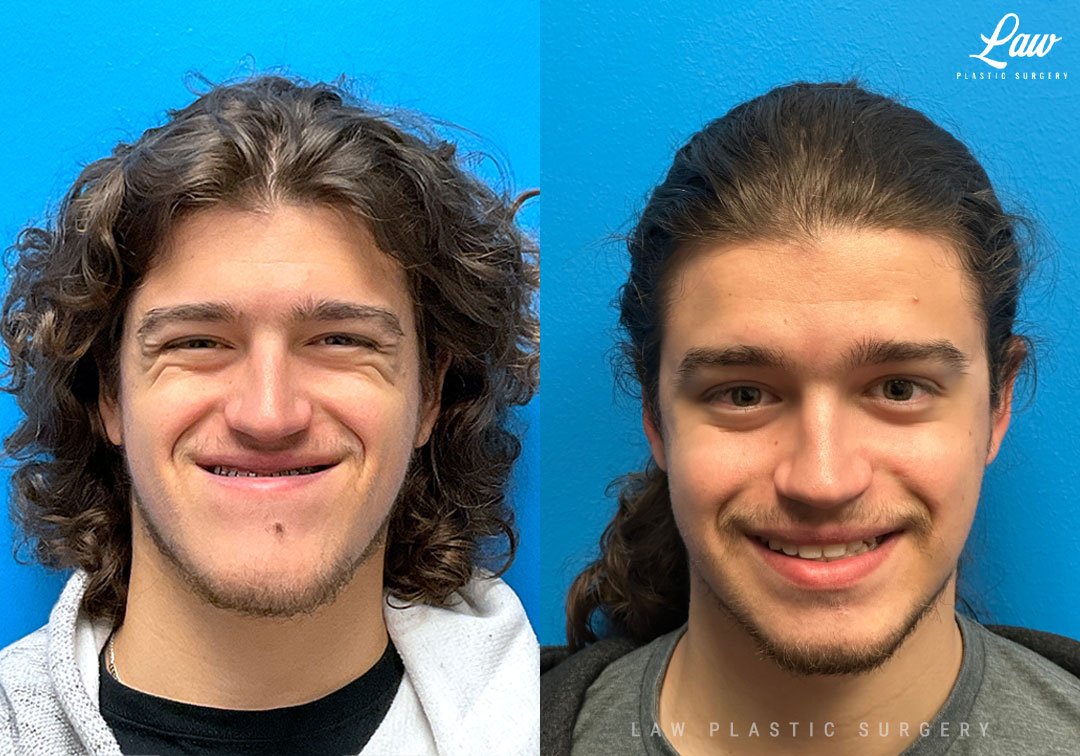
The primary goal of orthognathic surgery is to restore proper jaw function and facial harmony. Many patients notice significant improvement in their ability to chew and bite effectively following recovery. This improvement in function can transform daily activities that were previously challenging or uncomfortable.
Beyond function, jaw surgery offers numerous benefits:
- Enhanced breathing: Correcting jaw positioning can open the airway, alleviating sleep apnea and improving sleep quality
- Relief from TMJ symptoms: Proper alignment reduces strain on the jaw joint, decreasing pain and discomfort
- Improved speech clarity: Corrected bite positioning supports clearer articulation
- Better facial aesthetics: Achieving facial balance and symmetry enhances overall appearance
- Long-term dental health: Proper bite alignment reduces wear on teeth and supports healthy smile maintenance
Patients typically experience a significant enhancement in their quality of life, with many reporting increased confidence in social and professional settings.
The Jaw Surgery Procedure With Dr. Huay-Zong Law
Dr. Huay-Zong Law is a board-certified plastic surgeon with specialized expertise in craniofacial surgery, including upper and lower jaw surgery and distraction techniques. His advanced training at Washington University in St. Louis, UT Southwestern plastic surgery residency, and craniofacial fellowship at Medical City Dallas provides patients with exceptional surgical care.
Dr. Law’s approach to jaw surgery includes:
- Comprehensive evaluation and customized surgical planning for each Plano patient
- Utilization of virtual surgical planning and 3D imaging technology for precise results
- Coordination with orthodontists and other specialists for integrated treatment
- Hospital-based procedures ensuring optimal safety and access to advanced care
- Experience treating complex cases including rare genetic conditions and congenital anomalies
His published work includes successful treatment of patients with Gnathodiaphyseal Dysplasia using double-jaw surgery with stable results at two-year follow-up, demonstrating his capability with medically complex patients requiring the full scope of reconstructive techniques.
During the Procedure
During orthognathic surgery:
- General anesthesia is administered to ensure the patient remains comfortable and unaware throughout the procedure
- Dr. Law carefully makes precise incisions inside the mouth to access the jaw bones
- The bone is cut and repositioned according to the pre-surgical plan developed through virtual planning
- Bone segments may be removed, added, or adjusted to achieve proper alignment
Once the jaw is in its corrected position, titanium plates and screws are placed to secure the bones during healing. The mucosal lining is repositioned and sutured, and splints may be placed inside the mouth to support the new jaw position. This meticulous process ensures stable results and long-term relief from jaw-related symptoms.
Preparing for Jaw Surgery
Proper preparation is crucial for successful jaw surgery. The preparation phase typically begins 12-18 months before the surgical procedure with orthodontic treatment to align teeth and prepare the bite for skeletal repositioning.
Key preparation steps include:
- Medical evaluation: General health clearance, anesthesiology evaluation, and any necessary sleep studies if breathing issues are suspected
- Imaging: CBCT scans, CT imaging, and dental impressions for virtual surgical planning
- Medication management: Stop taking certain medications and supplements that affect bleeding, as directed by Dr. Law
- Lifestyle modifications: Smoking cessation is essential for optimal healing
- Nutrition planning: Prepare for post-surgical dietary needs including liquid and soft foods
- Logistics: Arrange for help during the first few weeks of recovery, plan time off work or school (expect 2-6 weeks depending on surgery extent)
Patients should inform Dr. Law about all medications, including over-the-counter drugs and supplements, to ensure safe surgical care.
Recovery Process and Postoperative Care
The recovery process after jaw surgery involves managing swelling, discomfort, and temporary changes in sensation. Understanding the expected timeline helps patients prepare for successful healing.
Recovery timeline:
- First week: Peak swelling around day 3, liquid diet, limited jaw movement, managed discomfort
- Weeks 2-4: Major swelling reduction, soft foods introduced, gentle jaw exercises begin
- 6 weeks: Initial bone healing, many daily activities resume
- 3-6 months: Continued improvement in strength, chewing capacity, and speech clarity
- 9-12 months: Full bone consolidation, sensory recovery often complete, final results apparent
Postoperative care guidelines:
- Sleep with head elevated for the first few days to minimize swelling
- Follow prescribed liquid diet progressing to soft foods over several weeks
- Maintain oral hygiene with recommended mouth rinses and gentle cleaning
- Avoid strenuous activities and contact sports for several months
- Attend all scheduled follow-up appointments with Dr. Law (typically at 1 week, 2 weeks, 4-6 weeks, 3 months, 6 months, and 1 year)
- Continue post-surgical orthodontic treatment for bite refinement
Sensory changes such as numbness in the lip or chin are common and typically improve over 6-12 months. Contact Dr. Law’s office immediately if you experience excessive pain, bleeding, or concerning symptoms.
Combining Jaw Surgery with Other Procedures
Combining jaw surgery with other procedures can enhance both functional and aesthetic outcomes. A common combination is performing orthognathic surgery alongside genioplasty (chin surgery) to refine the profile and achieve optimal facial harmony.
Additional combination options include:
- Orthodontic treatment: Essential for optimal bite alignment before and after surgery
- Rhinoplasty: Addresses nasal aesthetics in coordination with jaw repositioning for balanced facial appearance
- Turbinate reduction: Improves nasal airflow when breathing issues are present
Undergoing coordinated procedures offers the benefit of a single recovery period, reducing overall downtime compared to having separate surgeries. This comprehensive approach ensures that patients achieve both improved function and enhanced facial aesthetics through carefully planned treatment.
Long-Term Benefits of Jaw Surgery
Orthognathic surgery provides permanent correction of jaw alignment, offering lasting benefits that improve daily life for years to come. Success rates for achieving stable occlusion and patient satisfaction are reported at 90-95% by many treatment centers.
Long-term benefits include:
- Permanent improvement in bite function and chewing efficiency
- Lasting facial balance and enhanced appearance
- Continued relief from TMJ symptoms and jaw discomfort
- Better long-term oral health with reduced dental wear
- Prevention of future dental problems related to misalignment
- Sustained improvement in breathing and sleep quality
- Enhanced self-confidence in personal and professional settings
The investment in jaw surgery pays dividends throughout a patient’s lifetime, making it a worthwhile consideration for those dealing with significant jaw misalignment.
Scheduling A Jaw Surgery Consultation with Dr. Law
If you are looking for an experienced, compassionate, board-certified, and highly skilled plastic surgeon for jaw surgery, contact Law Plastic Surgery today. Dr. Huay-Zong Law is dedicated to providing each of his patients with exceptional care and natural-looking results.
Law Plastic Surgery is conveniently located at 7777 Forest Ln, C-528, Dallas, TX 75230, serving patients from Plano, Frisco, and throughout North Texas. To schedule an appointment, call (214) 241-1997. Taking the first step toward better jaw function, improved breathing, and enhanced facial harmony is just a phone call away.
Choosing Dr. Law For Your Jaw Surgery
In summary, orthognathic surgery offers a transformative solution for those suffering from jaw misalignment. By correcting the position of the upper and lower jaw, patients can experience improved chewing function, relief from facial pain and TMJ symptoms, better breathing, and enhanced facial aesthetics. Dr. Huay-Zong Law’s expertise in craniofacial and maxillofacial surgery ensures that each patient receives personalized care and exceptional results tailored to their specific needs.
Frequently Asked Questions
What is jaw surgery (orthognathic surgery)?
Orthognathic surgery, commonly called jaw surgery, is a surgical procedure designed to correct misalignment of the upper jaw, lower jaw, or both. This corrective jaw surgery repositions the jaw bones to improve bite function, facial symmetry, and overall quality of life.
Who is an ideal candidate for jaw surgery?
An ideal candidate for jaw surgery is someone experiencing significant bite problems, TMJ disorders, difficulty chewing or speaking, breathing issues, or facial asymmetry due to jaw misalignment. Candidates should have completed facial growth and typically have tried orthodontic treatment without achieving adequate correction.
How long does the jaw surgery procedure take?
Jaw surgery typically takes 1.5 to 2 hours for single jaw procedures (upper or lower) and 3 to 4 hours for double-jaw surgery involving both the upper and lower jaw, depending on the complexity of correction needed.
What can I expect during the recovery process?
During recovery, you can expect swelling, some discomfort, and temporary numbness. Initial bone healing occurs around 6 weeks, with full recovery taking 9-12 months. You will follow a liquid and soft food diet, avoid strenuous activities, and attend regular follow-up appointments with Dr. Law.
How do I schedule a consultation with Dr. Huay-Zong Law?
To schedule a consultation with Dr. Huay-Zong Law for jaw surgery, call Law Plastic Surgery at (214) 241-1997. The practice serves patients from Plano and throughout the Dallas-Fort Worth area.
Related Procedures